


Introduction: Navigating the Voice AI Landscape
In the rapidly evolving digital landscape of 2026, conversational AI and voice automation are essential for businesses aiming to deliver seamless, personalized customer experiences. This vapi ai review is designed for business leaders, product managers, and technical decision-makers who are evaluating voice AI solutions to enhance customer engagement and operational efficiency. If you are considering whether Vapi AI or a more agile alternative like VideoSDK is right for your organization, this review will help you make an informed choice.
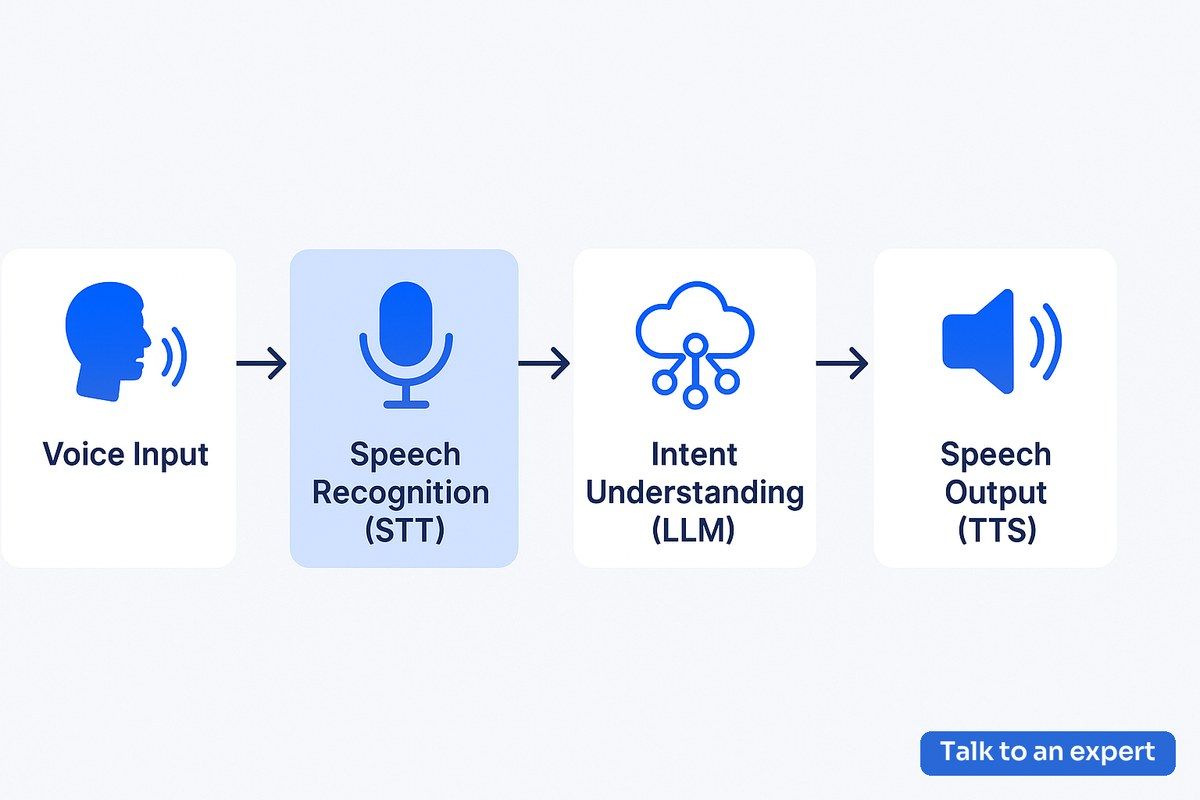
Vapi AI is a developer-centric platform built for real-time voice conversations, leveraging advanced speech-to-text (STT), large language models (LLM), and text-to-speech (TTS) technologies. It is particularly suited for engineering-driven organizations that require flexibility and deep customization for building AI phone agents. As voice automation becomes a competitive differentiator, understanding the strengths and weaknesses of each solution is crucial for long-term success.
In summary, Vapi AI offers robust capabilities for teams with strong technical resources, but there are compelling alternatives for those seeking lower complexity, faster deployment, or broader business user accessibility. This vapi ai review will dig deeper into the platform's core features, pros and cons, and how it compares to leading competitors.
What is Vapi AI?
Vapi AI is a comprehensive voice automation platform designed to empower organizations to build sophisticated AI phone agents. Its modular architecture allows teams to orchestrate real-time conversations by integrating their preferred STT, LLM, and TTS providers. This bring-your-own (BYO) infrastructure gives teams the flexibility to optimize for compliance, cost, and geographic requirements, making it a strong fit for companies with specialized needs or regulatory considerations.
For those new to voice agent development, the Voice Agent Quick Start Guide offers a clear, step-by-step introduction to deploying your first AI agent, simplifying the onboarding process for both developers and product managers. Vapi AI's documentation and support resources are tailored to technical audiences, ensuring that engineering teams have the tools and guidance needed to maximize the platform's potential.
Vapi AI's architecture is designed to support a wide range of use cases, from automated customer support to outbound sales campaigns and appointment scheduling. By leveraging the latest advancements in AI, Vapi AI enables organizations to create highly interactive and context-aware voice agents that can handle complex customer interactions. This flexibility is especially valuable for enterprises operating in regulated industries or those with unique workflow requirements. In practice, vapi ai review works best when integrated with existing CRM, telephony, and support tools.
Key Features and Capabilities
- Real-time Orchestration: Vapi AI seamlessly integrates STT, LLM, and TTS technologies to enable fluid, natural conversations. This is crucial for industries such as customer support and call centers, where high call volumes demand rapid, accurate responses. For example, a retail enterprise can deploy Vapi AI to automate customer queries during peak periods, reducing wait times and boosting satisfaction.
- Visual Flow Studio: The platform's intuitive visual tools allow teams to design and map out conversation flows, making it easier for non-technical stakeholders to collaborate on AI-driven customer journeys. Marketing teams can leverage this capability to create interactive voice campaigns that drive engagement.
- Agent Chaining & Tool Calling: Vapi AI supports combining multiple agents and connecting with external tools via APIs, enabling complex workflows. Financial institutions, for instance, can use specialized agents for tasks like loan applications, account management, and fraud detection, all within a unified customer service experience.
- Global Telephony Support: With support for both local and international phone numbers and efficient call routing, Vapi AI is well-suited for multinational businesses that require consistent brand experiences across regions. This ensures that customers worldwide receive reliable, high-quality service.
- Multi-language Support: Vapi AI's multilingual capabilities make it possible to serve diverse global audiences. Businesses in travel, hospitality, or e-commerce can provide support in multiple languages, breaking down communication barriers and increasing customer loyalty.
- Role-based Controls: The platform offers role-based access management, which helps protect sensitive configurations, though some limitations exist. This is especially important in sectors like healthcare, where data privacy and security are critical.
- Developer-first Approach: With robust REST APIs, SDKs, and CLI tools, Vapi AI empowers engineering teams to create tailored solutions that integrate seamlessly with existing business systems, supporting agile development and rapid iteration.
For organizations exploring vapi ai review, the priority is measurable ROI and practical deployment.
Vapi AI also provides advanced analytics and monitoring features, giving organizations deep visibility into call performance, agent interactions, and customer satisfaction metrics. These insights enable continuous optimization of voice agent workflows and help identify areas for improvement. The platform's support for custom integrations ensures that businesses can connect Vapi AI with CRM systems, ticketing platforms, and other enterprise tools, creating a unified ecosystem for customer engagement.
Pros and Cons
Pros
- Customizability: Vapi AI's modular design enables organizations to select best-in-class STT, LLM, TTS, and telephony providers, tailoring the platform to their specific requirements.
- Scalability: The platform can scale from a handful of calls to thousands, supporting business growth without compromising performance.
- Multi-provider Integration: Seamlessly connects with multiple AI and telephony vendors, simplifying management for enterprises with diverse technology stacks.
- Compliance: Supports HIPAA and SOC 2 standards, making it suitable for regulated industries such as healthcare and finance.
- Advanced Analytics: Vapi AI offers detailed reporting and analytics dashboards, allowing teams to track call outcomes, agent performance, and customer sentiment. These insights are invaluable for optimizing workflows and ensuring high service quality.
Cons
- Complexity: Initial setup and ongoing management demand significant engineering resources, which can be a barrier for smaller teams.
- Hidden Costs: Usage-based fees can accumulate quickly, requiring careful monitoring to avoid budget overruns.
- Technical Barrier: Limited support for non-developer users may hinder adoption by business teams lacking technical expertise.
- Latency: Real-time orchestration across multiple providers can introduce call delays, potentially impacting customer experience.
- Limited No-code Tools: The absence of robust no-code or low-code solutions means that business users may struggle to iterate quickly or experiment with new workflows without developer assistance.
Top Alternatives
While Vapi AI is a powerful option for engineering-led organizations, it may not be the best fit for teams seeking simplicity, rapid deployment, or business-user-friendly tools. VideoSDK emerges as a leading alternative, especially for companies prioritizing speed and ease of use: Leaders evaluating vapi ai review often start with one high-volume workflow before scaling further.
- No-code and Low-code Tooling: VideoSDK enables the design and management of AI phone agents with minimal engineering input, empowering business users to launch solutions quickly. For example, a small business can set up an AI-powered support line without needing a dedicated development team.
- Seamless Integration: Modern APIs and SDKs allow for easy integration with existing workflows and systems, enabling logistics or e-commerce companies to automate customer updates and notifications through voice AI.
- Flexible Pricing: Transparent, predictable billing covers AI, telephony, and compliance, making budgeting straightforward and avoiding surprise costs.
- Enterprise-ready Compliance: VideoSDK includes built-in HIPAA, SOC 2, and GDPR features, helping organizations meet regulatory requirements from day one.
- Rapid Iteration: With drag-and-drop tools and visual editors, VideoSDK allows teams to quickly test and refine voice agent workflows, reducing time-to-market for new features or campaigns. A practical roadmap for vapi ai review begins with a pilot use case, defined KPIs, and a path to production.
Other notable alternatives in the voice AI space include:
- Twilio Voice: Known for its developer-centric APIs and global telephony network, Twilio is widely used for programmable voice applications but may require significant custom development.
- Google Cloud Dialogflow: Offers advanced conversational AI capabilities and deep integration with Google Cloud, but can be complex for non-technical teams.
- Microsoft Azure Bot Service: Provides robust voice and chat capabilities with enterprise security, though it may involve a steep learning curve for some organizations.
Each alternative brings its own strengths and trade-offs. When evaluating platforms, consider factors such as ease of integration, scalability, compliance, support, and the ability to adapt to evolving business needs. This vapi ai review recommends a thorough assessment of both technical and operational requirements before making a selection.
Comparison Table: Vapi AI vs. VideoSDK
| Feature/Criteria | Vapi AI | VideoSDK Agents Framework |
|---|---|---|
| Technical Barrier | High (developer-focused) | Low (no-code/low-code friendly) |
| Flexibility | High (BYO infrastructure) | High (integrated + extensible) |
| Integration | Multi-provider, complex setup | Streamlined, unified APIs |
| Pricing Transparency | Complex, variable | Predictable, all-inclusive |
| Compliance | HIPAA, SOC 2 ready | HIPAA, SOC 2, GDPR out of box |
| Time to Value | Slow (engineering required) | Fast (business user ready) |
| Latency | Moderate (multi-provider) | Low (optimized pipeline) |
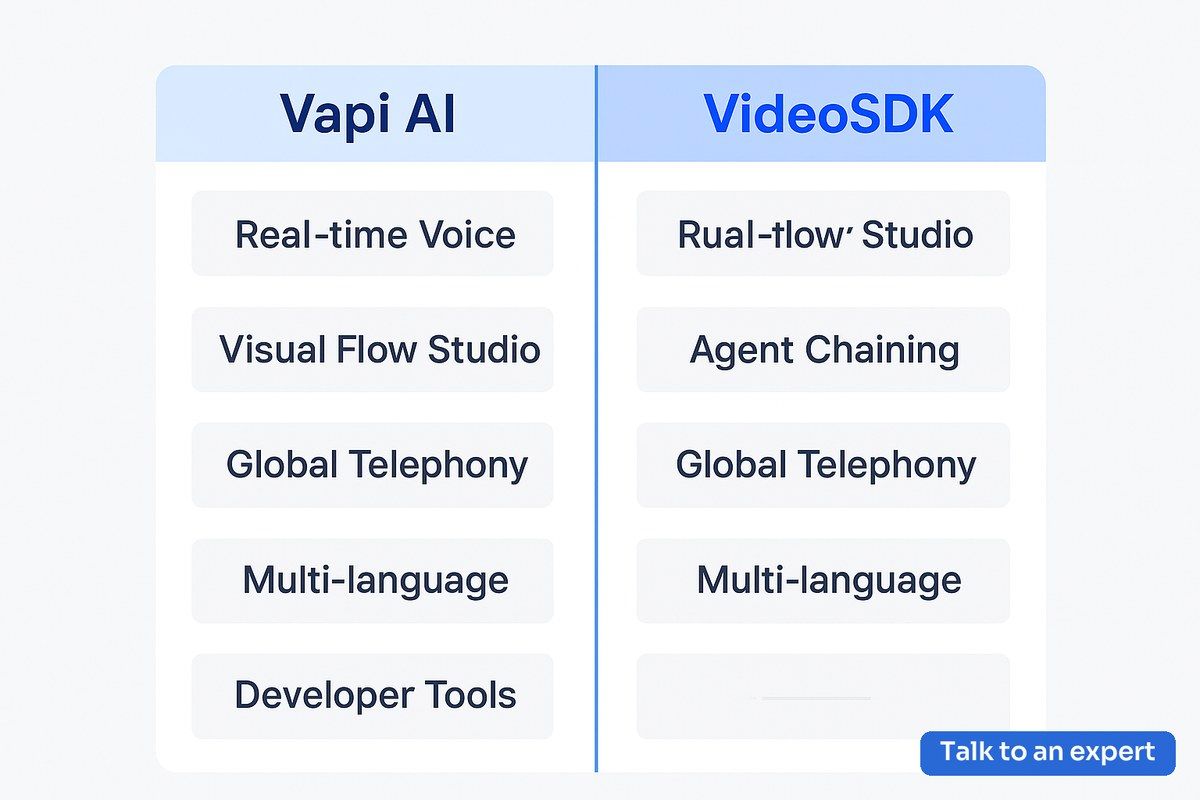
This comparison highlights the core differences between Vapi AI and VideoSDK. While Vapi AI excels in flexibility and customizability, it comes at the cost of higher complexity and a steeper learning curve. VideoSDK, on the other hand, is designed for rapid deployment and ease of use, making it ideal for organizations that need to move quickly or lack extensive technical resources. The choice between these platforms often comes down to organizational priorities and the specific needs of your business. Teams that adopt vapi ai review typically measure success through faster response times and lower handle costs.
When to Choose Vapi AI vs Building with VideoSDK
Vapi AI is ideal for organizations with strong technical teams that require deep customization and control over their voice AI infrastructure. If your business needs to integrate multiple best-in-class AI and telephony providers, or you have strict regulatory and compliance requirements, Vapi AI's flexibility and modular approach can be highly advantageous.
On the other hand, if your priority is rapid deployment, ease of use, and predictable costs, VideoSDK is a compelling choice. It empowers product managers and business users to design, launch, and manage AI phone agents without heavy engineering investment. For example, a retail chain needing to quickly roll out an AI-driven customer support hotline can benefit from VideoSDK's no-code tools and fast time-to-value. Conversely, a fintech company with complex, custom requirements may favor Vapi AI for its extensibility and BYO infrastructure.
Another consideration is the pace of innovation. VideoSDK's frequent updates and user-friendly features enable organizations to stay ahead of market trends and customer expectations. Teams can experiment with new conversational flows, integrate emerging AI models, and respond to changing business needs with minimal friction. In contrast, Vapi AI's developer-first approach is best suited for organizations that prioritize control and are willing to invest in ongoing development and maintenance.
Implementation Considerations for Teams Building Voice AI
This vapi ai review highlights several operational challenges and decision points for organizations considering voice AI platforms:
- Onboarding Complexity: Vapi AI's engineering-driven setup can extend the time required to achieve value. Teams should plan for a learning curve and allocate resources for initial configuration and integration.
- Lack of Visual Fallback Tools: The absence of robust no-code solutions in Vapi AI can slow iteration cycles. Organizations may need to invest in additional training or third-party tools to bridge this gap.
- Minimal Role-based Access: Limited role-based controls can restrict collaboration in larger teams, impacting workflow and governance. Evaluate how this limitation might affect your organization's operational model.
- Latency Issues: Real-time orchestration across multiple providers can introduce delays. Rigorous testing and optimization are essential to maintain a high-quality customer experience.
- Support and Community: Consider the quality of vendor support, documentation, and user community. Platforms with active communities and responsive support teams can help resolve issues faster and accelerate adoption.
In scenarios where human oversight or intervention is necessary, VideoSDK's Human-in-the-loop for AI voice Agents feature enables seamless escalation, ensuring compliance and service quality. This is especially valuable in industries such as healthcare, finance, or legal services, where sensitive interactions may require human review or intervention to meet regulatory standards.
For additional research and industry context, authoritative sources such as Gartner Research on AI and McKinsey & Company on AI provide valuable insights into the evolving landscape of conversational AI and automation. Staying informed about industry trends and best practices can help organizations future-proof their investments and maximize the ROI of their voice AI initiatives.
Conclusion: Making the Right Choice for Your Business
This vapi ai review demonstrates that while Vapi AI is a powerful and flexible platform, it is best suited for organizations with significant technical resources and a need for deep customization. For many businesses, the complexity and potential hidden costs may outweigh the benefits. Modern alternatives like VideoSDK offer a more accessible, scalable, and future-proof approach to voice AI, reducing risk and enabling faster innovation.
Ultimately, the right voice AI platform should align with your organization's technical capabilities, business goals, and regulatory requirements. By carefully weighing the strengths and limitations of each solution, leaders can make confident, informed decisions that drive long-term value. Whether you choose Vapi AI for its flexibility or VideoSDK for its simplicity and speed, the key is to select a platform that supports your vision for customer engagement and operational excellence in the age of conversational AI. When planning vapi ai review, align stakeholders on data privacy, workflow design, and clear escalation paths.
FAQ